

TMJ Treatment (Grinding).
Help for grinding, jaw pain, clicking and tension headaches.
- 30 minute initial consult; follow-up visits as needed
- Reviewed every 4 to 8 weeks during active treatment
- All major health funds
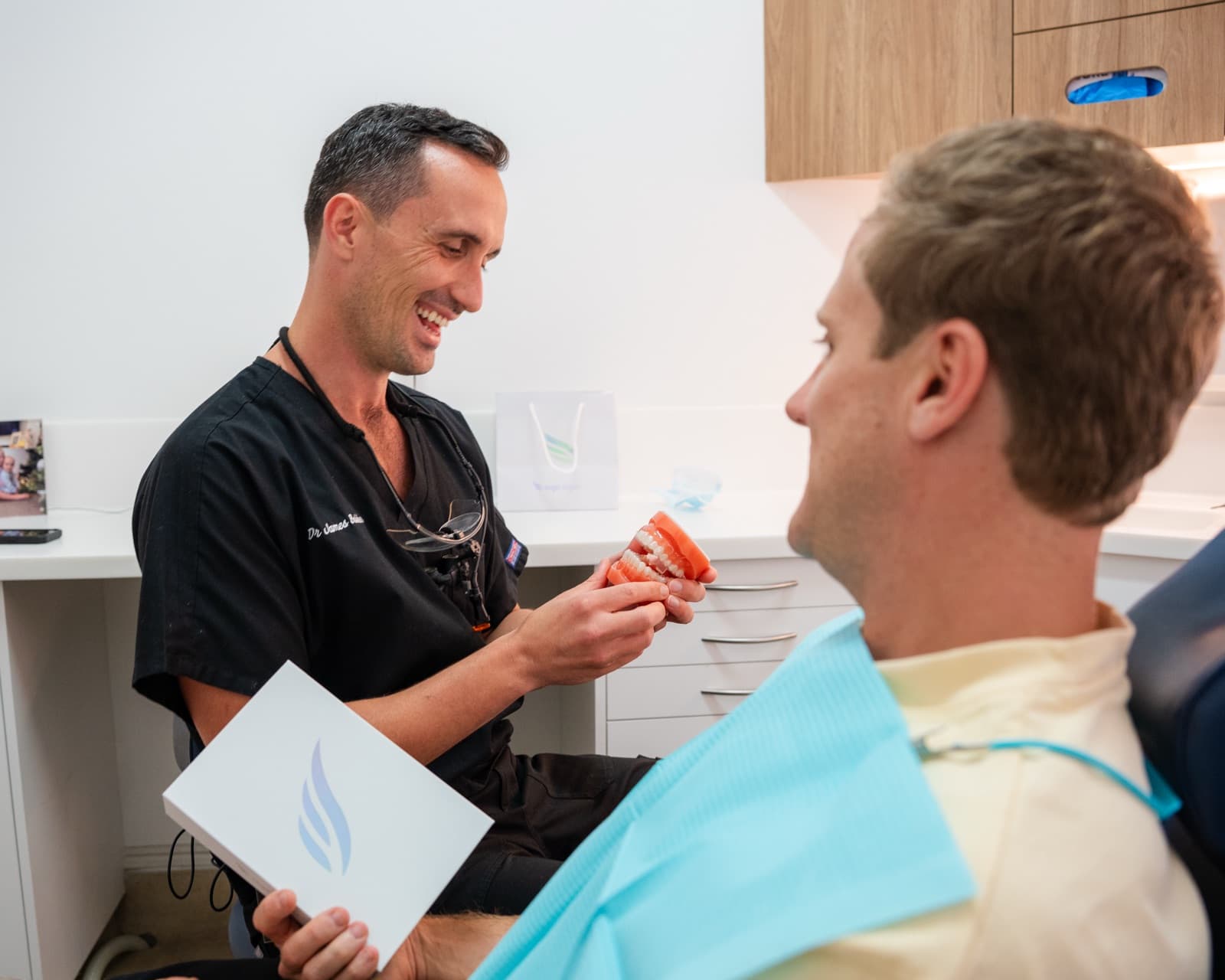
If you grind your teeth, your jaw clicks, locks or aches, or you wake up with tension headaches, your TMJ (jaw joint) might be the cause. We assess, diagnose, and offer treatment options, from splints to muscle therapy.
What to expect
How a tmj treatment (grinding)
appointment runs.
We keep things calm and unhurried. Here's the rhythm you can expect from start to finish, no surprises.
History
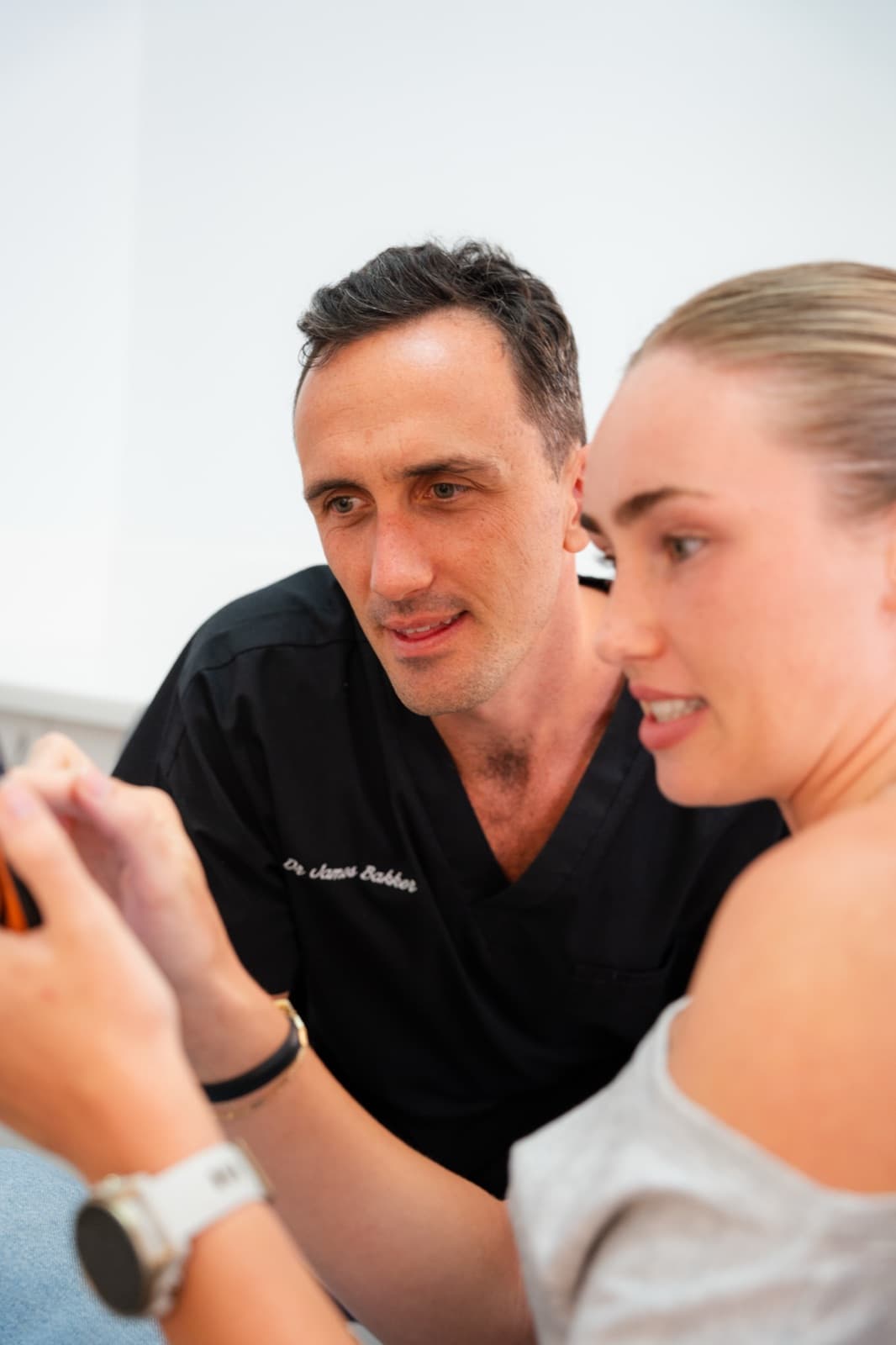
TMJ symptoms cross over with sleep, stress, posture and bite. We take a careful history, when it started, what makes it worse, your sleep pattern. The detail matters.
Examination
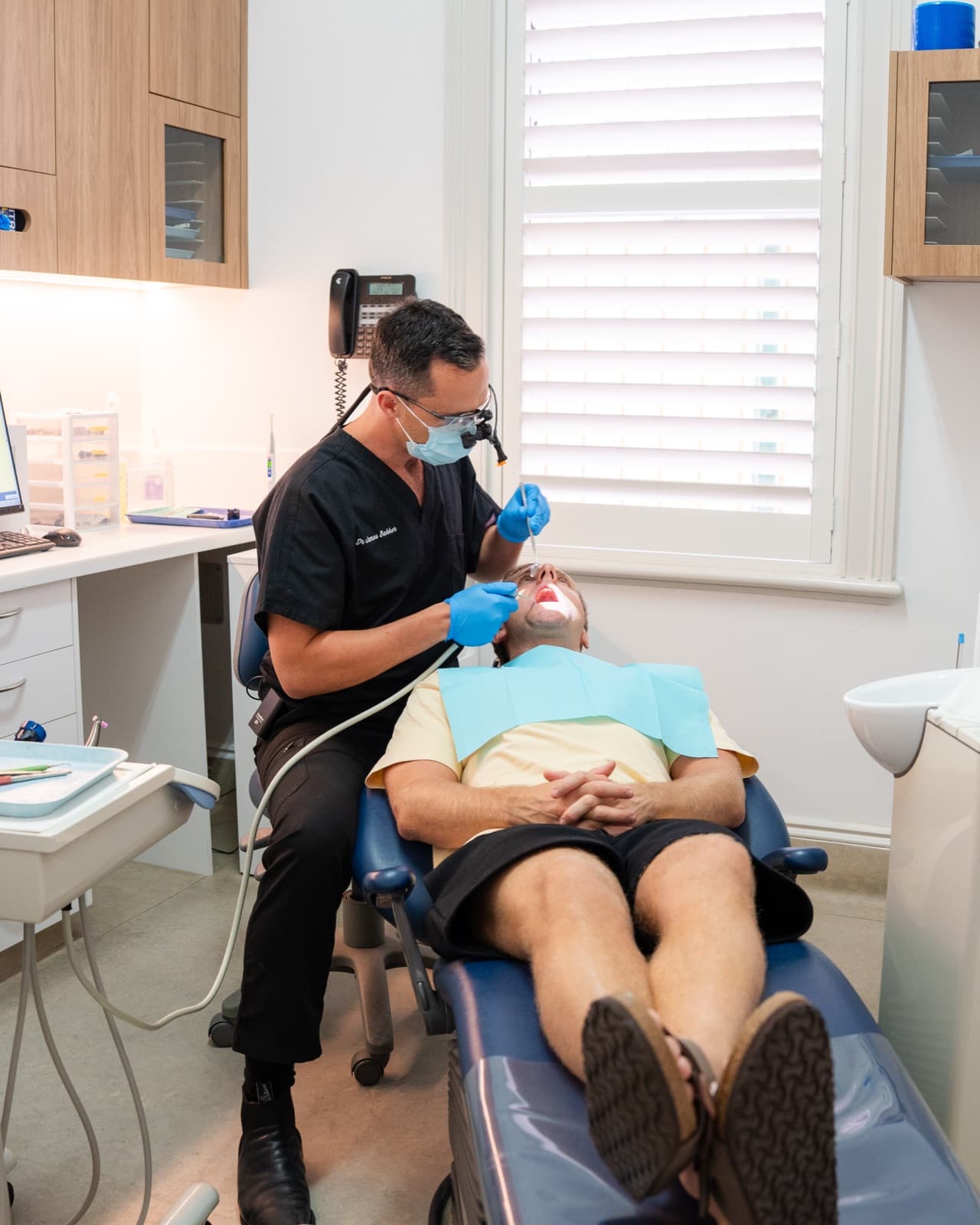
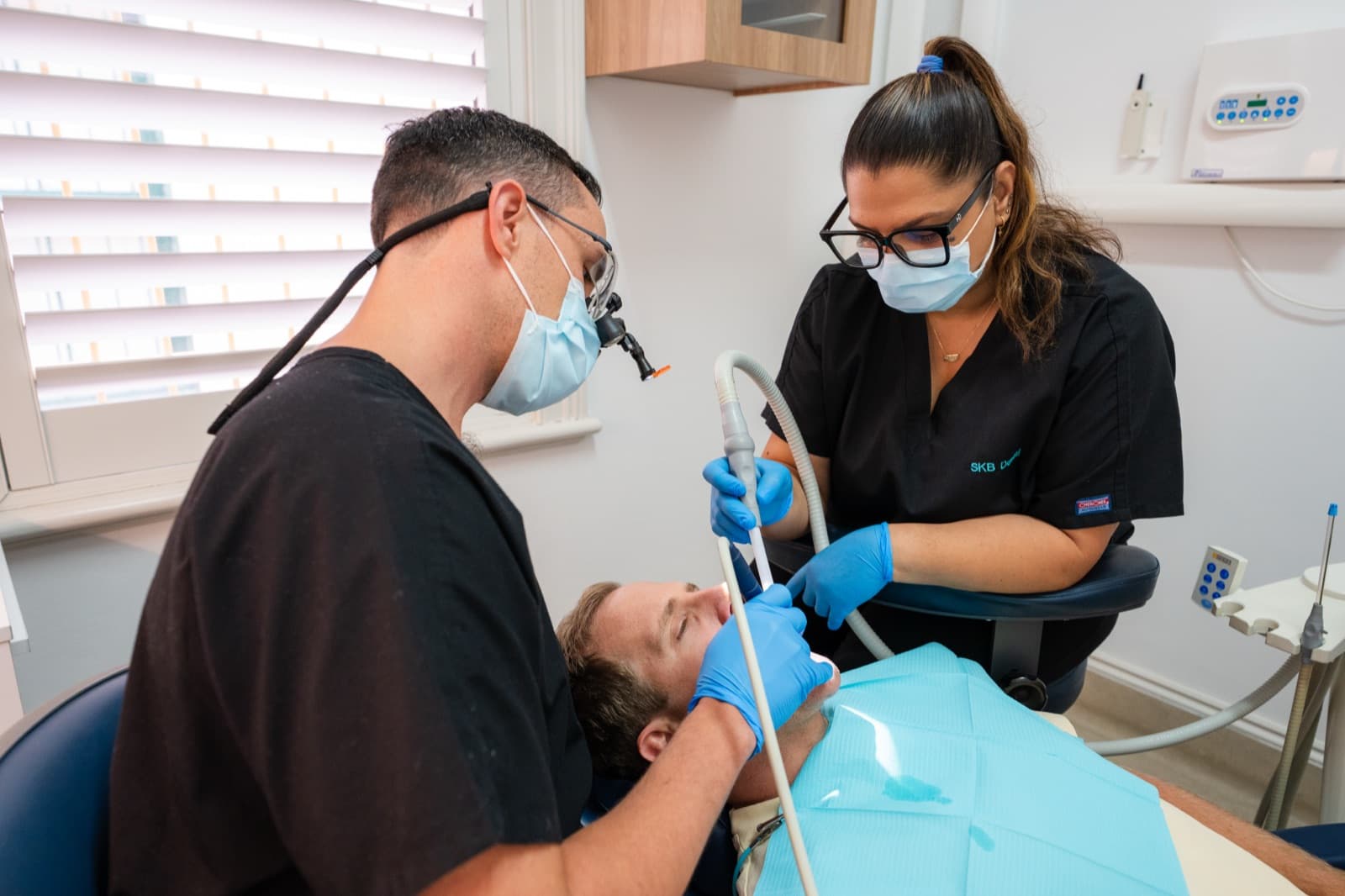
We feel the jaw muscles for tenderness, watch the joint move, listen for clicking, check your bite for wear patterns and any signs of grinding.
Plan
Treatment depends on the diagnosis. Often a custom night splint to protect teeth and unload the joint. Sometimes muscle exercises, stress management, or referral to a physiotherapist or orofacial-pain specialist.
Review
We re-assess in 4 to 6 weeks. Most patients see a meaningful change in symptoms by then. We adjust the plan from there.
What's included
Every appointment, in full.
- Detailed history (jaw pain, headaches, sleep, stress, grinding habits)
- Examination of jaw muscles, joint movement and bite
- Bite analysis and screening for tooth wear
- Assessment for night-time grinding (bruxism)
- Treatment plan, splint therapy, muscle care, bite adjustment or referral
- Custom-fitted occlusal splint where indicated
- Follow-up reviews to track progress
Common questions
Things people
often ask.
Can't see your question? Call us on (02) 9580 1024 and we'll happily talk it through.
Hurstville & St George
Caring for tmj treatment (grinding) patients across the local area.
We see patients from Hurstville, Penshurst, Allawah, Mortdale, Carlton, Beverly Hills and across the wider St George and Sutherland Shire region. The practice is a short walk from Hurstville Station with on-street parking nearby.
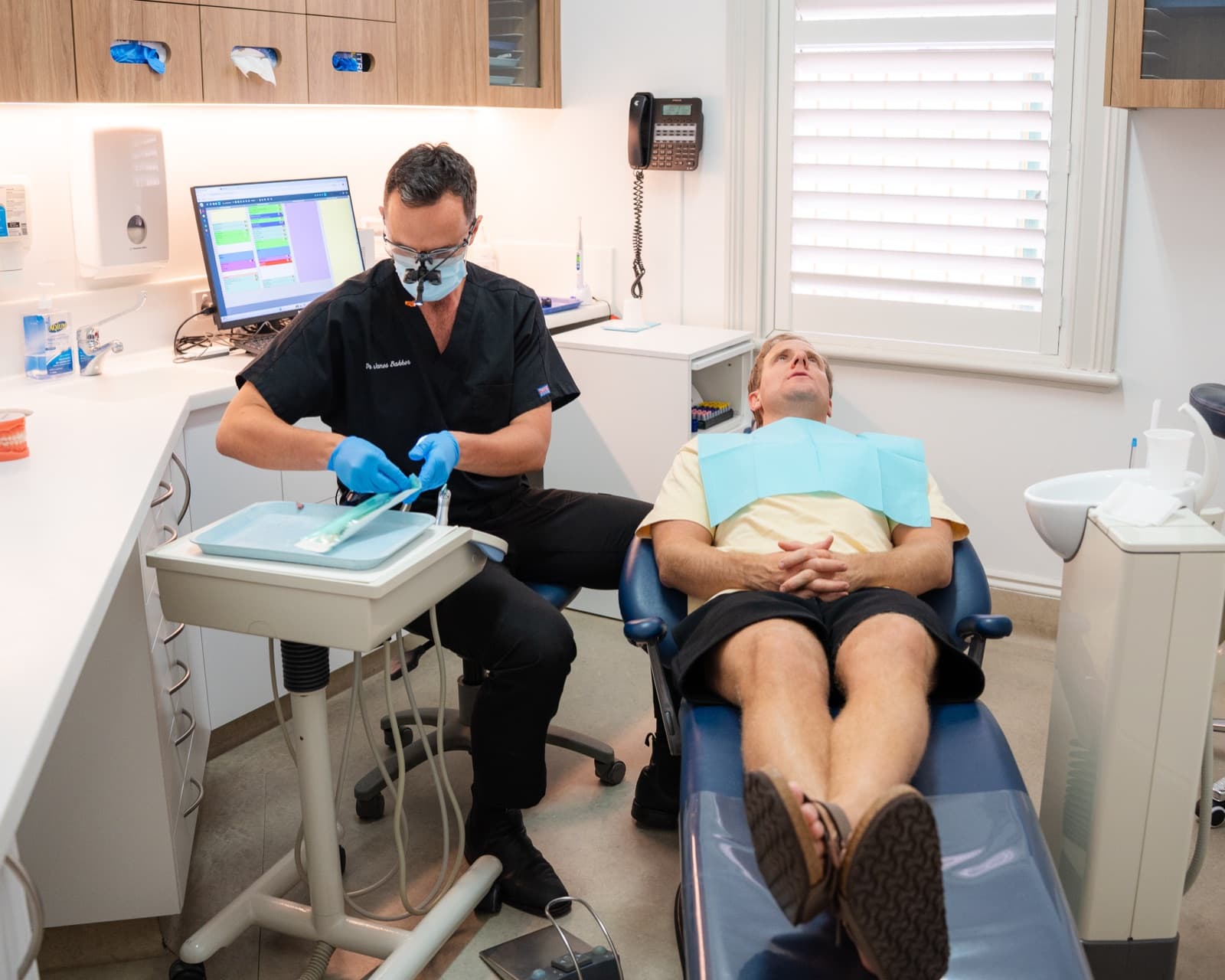
39 Dora Street, Hurstville
Modern dentistry, the gentle way.
Booking
Ready to book your tmj treatment (grinding)?
Call us or book online, we'll find a time that suits.
Other general dentistry treatments
Check-Up & Clean
A gentle six-month exam, scale and polish.
Fillings
Tooth-coloured fillings that disappear into your smile.
Periodontal (Gum Disease)
Treatment for inflamed or receding gums.
Root Canal Therapy
Save a tooth that would otherwise need extraction.
Tooth Extraction
Gentle removal when a tooth can't be saved.
Minor Oral Surgery (Wisdom Teeth)
Wisdom teeth and surgical extractions.
Snoring Treatment
Custom oral appliances to reduce snoring.
Mouth Guards
Custom-fit protection from impact.
Night Guards
Protection for grinding and tooth wear.